From the Medical Director
Prof Robert McLachlan
AM, FRACP, PhD
Despite the complex challenges facing Australian men and their wellbeing, Healthy Male has continued to make significant strides to change their health outcomes for the better, now and well into the future. From collaborating on transformative research projects to expanding our training and education offering — we have strived to improve the healthcare system and support the tireless efforts of those who work within it, to ensure men and boys receive best-practice, evidence-based care across the country.
Education and training
In 2022-23, we have connected with healthcare professionals through a range of important pathways. Our release of a new clinical summary guide on Body Dysmorphic Disorder (BDD) provides health practitioners with the critical information they require to identify and treat this debilitating condition.
We continue to invest in accredited training activities for health practitioners to improve male health care across diverse disciplines and this year we added two new eLearning courses to our suite. Male factor infertility: A training program for assisted reproductive technology specialists, is a critical resource to help better identify and manage male factor infertility. Our new Plus Paternal: Talking to Dads eLearning activity offers practical tips and examples for improving communication with fathers and other non-birthing parents, for the benefit of the whole family.
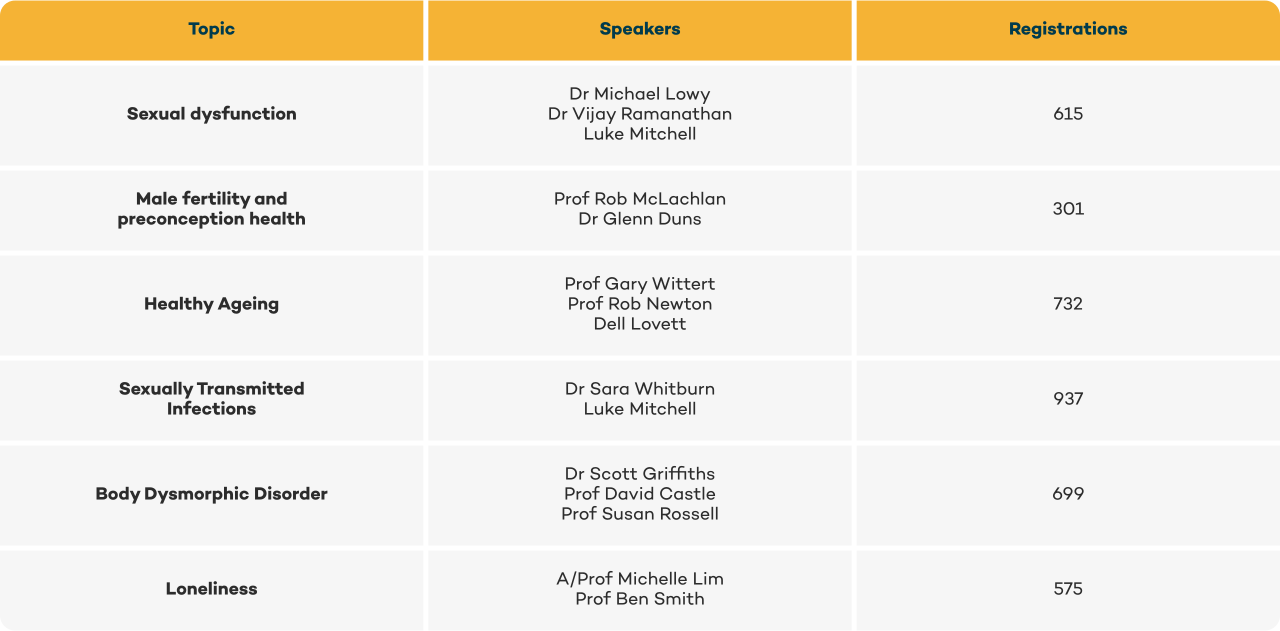
We also created six live and on-demand webinars, which saw a significant turnout from health professionals ranging from nurse practitioners to psychologists. Our topics included important issues such as loneliness, healthy ageing, sexually transmitted infections, sexual dysfunction, male fertility and preconception health. These webinars were hosted live on the Medcast eLearning platform and continue to be accessed on-demand.
Research
Healthy Male has continued to contribute its expertise to a range of important research projects that impact the wellbeing of Australian men and boys. These include Male Infertility across the Lifetime (MRFF) — assessing nearly 100 clinical recommendations relating to male infertility to establish a suitable resource for Australian clinicians — and Prostate Cancer Survivorship Essentials (NHMRC) —recruiting participants for a hybrid trial of a telehealth nurse-led survivorship care intervention for men undergoing androgen deprivation therapy for prostate cancer.
We also conducted 10 reviews of men’s health research to explore and share relevant insights for anyone with an interest in this field and contributed to two important academic publications about male infertility.
None of this could have been achieved without the support of our advisory groups including:
- Aboriginal and Torres Strait Islander Male Health Reference Group
- General Practitioner Advisory Group
- Health Practitioner Advisory Group
- Scientific and Clinical Committee
Healthy Male would not be able to work towards its mission if it were not for the knowledge and extensive experience of the members of these groups. We are very grateful for their ongoing contributions amidst their own busy schedules.
As the Medical Director of Healthy Male, I applaud the many health practitioners who take the time to learn more about the ongoing health needs of Australian males.
Our professional education

We provide eLearning activities, webinars and conference presentations for health and medical professionals as part of our continuing professional development offering. This year we released 16 self-paced eLearning training activities through the Healthy Male eLearning portal. Our courses provide current and credible professional development opportunities for health and medical professionals, with 15 of our training activities endorsed by peak bodies.
Highlights from the year:
- The development and launch of two new eLearning activities
- Male factor infertility: A training program for assisted reproductive technology specialists
- Plus Paternal: Talking to Dads
- 451 course enrolments across 16 activities
- The production of six live and on-demand webinars
- 20 presentations at conferences and events
Healthy Male courses are endorsed by:
- Royal Australian College of General Practitioners
- Australian College of Rural and Remote Medicine
- Australian Primary Health Care Nurses Association
- Australian College of Nursing
- Australian Diabetes Educators Association
- Fertility Society of Australia and New Zealand
- Royal Australian College of Obstetricians and Gynaecologists
- Australian Association of Psychologists Inc.
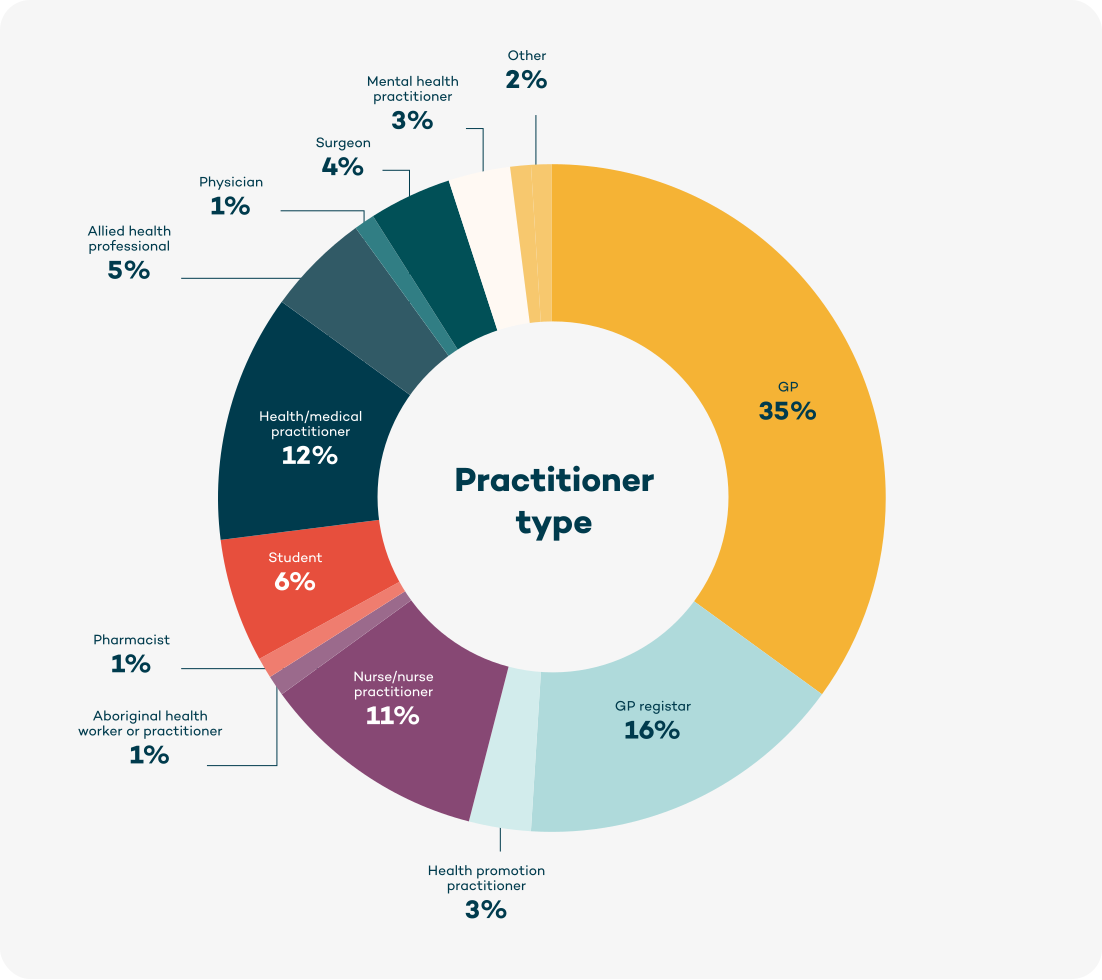
Breakdown of eLearning participants by profession
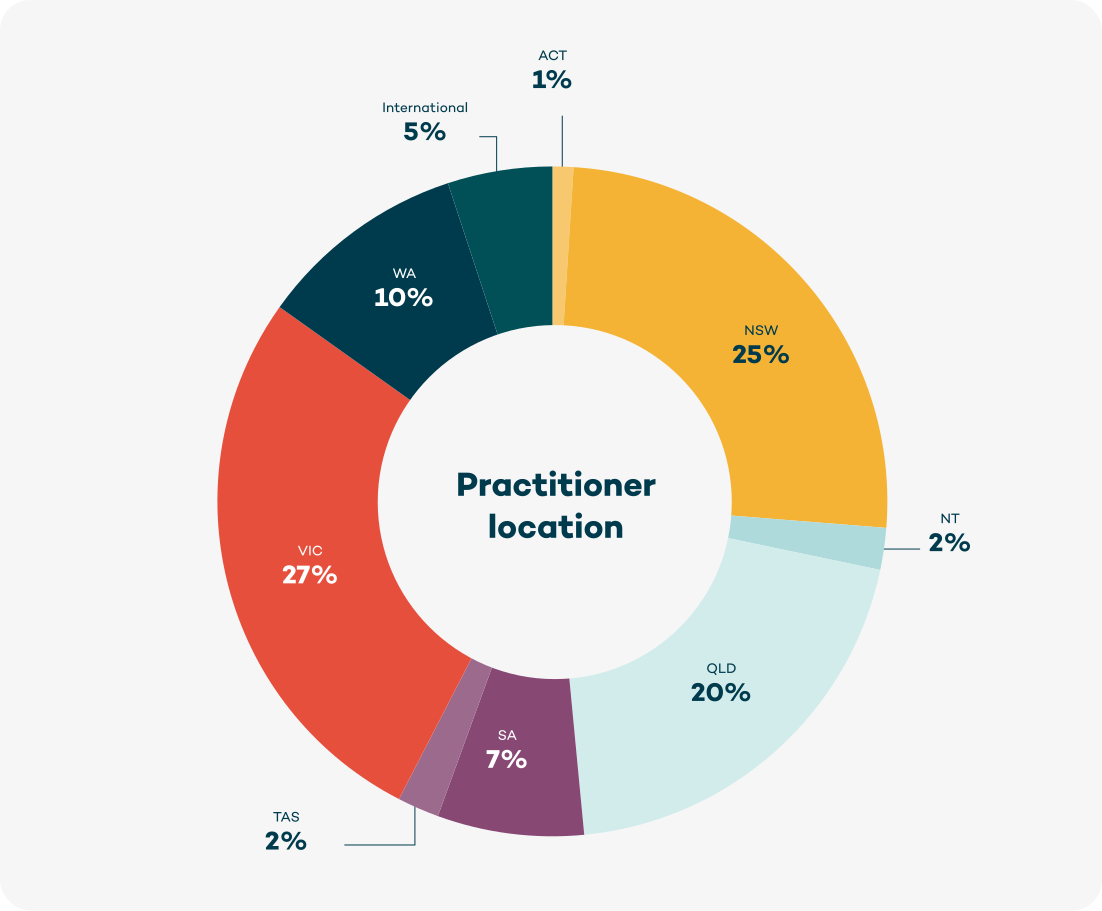
Breakdown of eLearning participants by practitioner location
Webinars
Another component of our educational resources for health professionals is our live and on-demand webinars. We produced six male health webinars in the past year. Topics ranged from loneliness to healthy ageing to sexual health screening.
These webinars were hosted live on the Medcast eLearning platform and continue to be accessed on-demand.
Our webinars were most popular with medical practitioners, nurses/nurse practitioners and psychologists.

Presentations
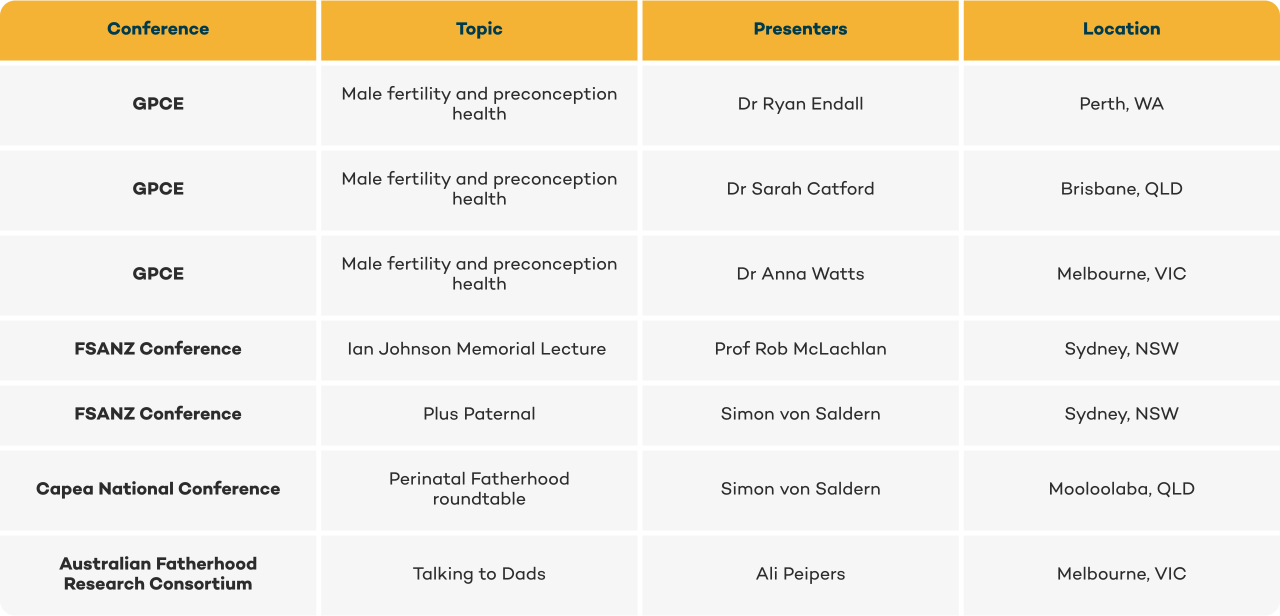
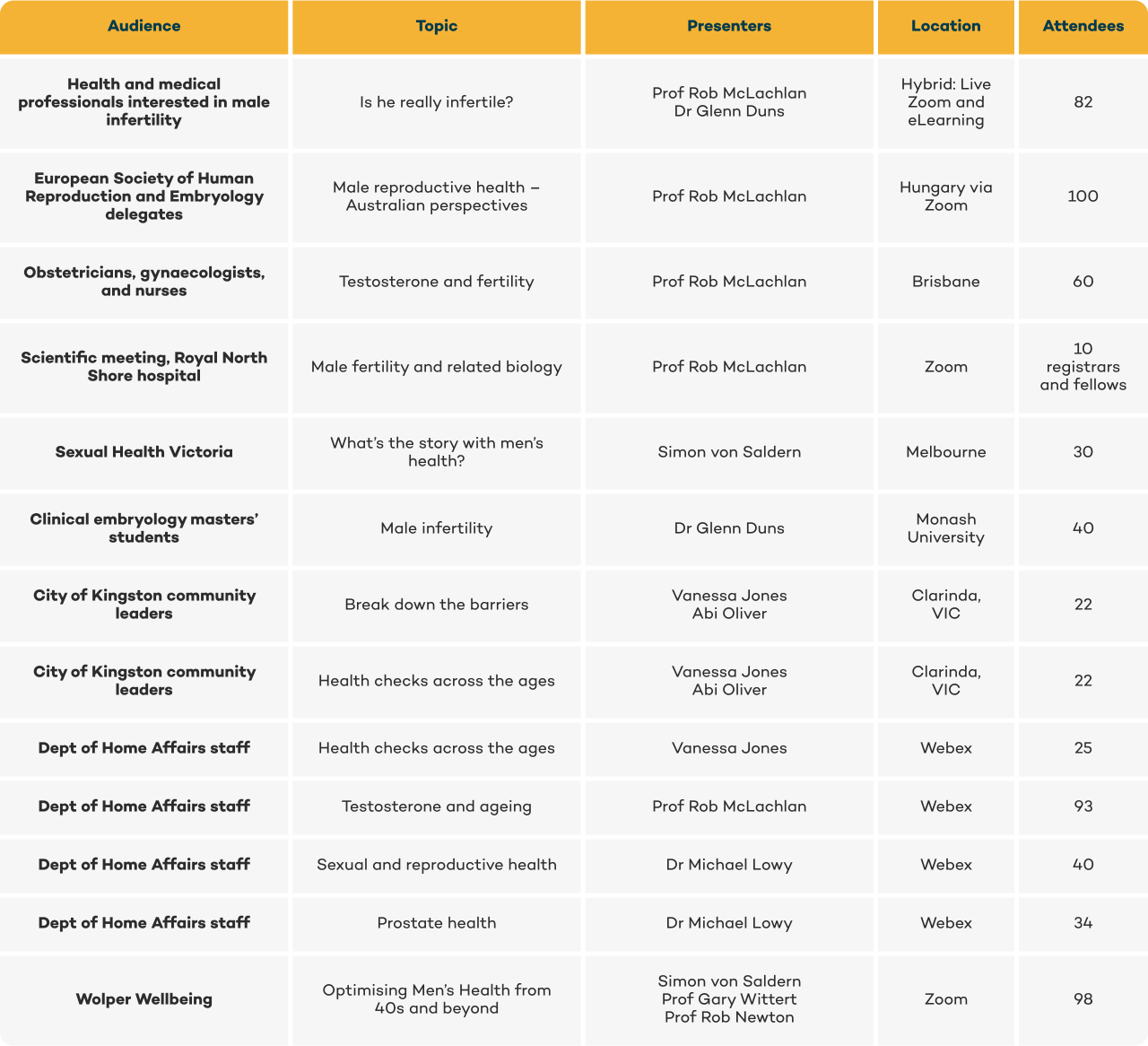
In the past year, we delivered 20 presentations at conferences and events, connecting with over 1,200 health and medical practitioners.
Conferences
Events
Our resources and research
In the past year, we have addressed more health conditions, and broadened our clinical health topic coverage, to ensure health practitioners are kept up to date with important developments in male health in Australia.
Body dysmorphic disorder (BDD) is a prime example of this. BDD is a mental illness that’s characterised by persistent and intrusive preoccupation with a part of the body, whether that’s facial features, body hair, skin complexion, hair loss, penis size or musculature. It affects one in 50 people, and despite public perception of body image issues predominantly impacting women, BDD is just as common in males as in females.
To address this, we have developed several new resources to help health professionals learn more about BDD, and help those affected.
Here are some of our highlights from the past year.
Clinical summary guides
Healthy Male offers a range of clinical summary guides on the management of male reproductive and sexual health to help health professionals care for male patients.
Our clinical summary guides are systematically developed with the best available scientific evidence, to assist health professionals in making clinical decisions about appropriate health care. They translate evidence into actionable recommendations and feature an educational video to expand on the information covered.
Our newest clinical summary guide on body dysmorphic disorder was developed to help GPs identify the condition in patients, organise referrals to psychologists or other medical specialists and assist patients to understand and manage the disorder.
Partners’ Guide
Health conditions that impact men and boys can also affect their partners. Because of this, we developed evidence-based guides to help the partners, family and friends of men suffering from common health conditions. They cover causes, impact and treatment options, and help make talking with each other, and their health professional, easier.
This year, we added body dysmorphic disorder to our Partners’ Guide collection. This guide is particularly critical as people with BDD often might not even realise they have a problem, so if it’s not raised with them, they’re unlikely to get help.
Research reviews
We regularly review and summarise research articles published in scientific and medical journals that are relevant to the growing evidence base in male health.
Our research reviews are for anyone with a professional or personal interest in male health, and cover a range of topics, including prostate disease, prostate cancer, testicular cancer, male infertility, androgen deficiency, and erectile dysfunction, as well as other emerging areas relevant to the health and wellbeing of Australian men and boys.
This year, we have published the following research reviews:
- Reassuring evidence about the safety of testosterone treatment for men with androgen deficiency
- Longitudinal changes in serum testosterone and sex hormone‐binding globulin in ageing men
- Brief assessment of male depression in clinical care: Validation of the Male Depression Risk Scale short form in a cross-sectional study of Australian men
- The evidence base for male infant circumcision
- Understanding anxiety in men
- Why geography is more important than your generation when it comes to sperm quality
- Healthy diets and semen quality
- Erectile dysfunction and cognitive decline
- Reassurance about the safety, and likely benefit, of testosterone replacement therapy for men with hypogonadism
- Why talking to dads is critical
Research projects
Our expertise and evidence-based approach to providing information creates opportunities to join forces with other male health organisations for important projects.
This year, our research projects have included:
- Male infertility across the lifetime (MRFF)
- Our expert panel has discussed two-thirds of nearly 100 clinical recommendations relating to the diagnosis and management of infertility in males, for the establishment of a resource suitable for Australian clinicians.
- Prostate cancer survivorship essentials (NHMRC)
- This type 1 effectiveness-implementation hybrid trial of a telehealth nurse-led survivorship care intervention for men undergoing androgen deprivation therapy (ADT) for prostate cancer has begun recruiting patients in centres across the country.
- Population genomic screening of young adults to prevent cancer in Australia (Medical Research Future Fund) — DNAScreen
- This pilot is investigating the feasibility of providing population-based genetic screening through the public health system, to identify people at risk of various cancers and familial hypercholesterolaemia
- ‘Lifestyle and environmental risk factors for unexplained male infertility: study protocol for Australian Male Infertility Exposure (AMIE), a case-control study’ — Murdoch Children’s Research Institute
- ‘Australia’s fertility rate is at an all-time low: Cohort study to address determinants of male & female reproductive health & fertility & associations with physical & mental health’ — University of Western Australia
- ‘Higher premorbid serum testosterone predicts COVID-19-related mortality risk in men’ — University of Western Australia
Academic publications
We have also contributed to two important academic publications in the past 12 months:
This study addresses an important gap in research on the aetiology of male infertility and will provide a comprehensive profile of the lifestyle and environmental risk factors for male infertility, leading to provision of up-to-date health advice for male teenagers and adults about optimising their fertility
A health professional training needs survey

In October 2022, we connected with 233 health practitioners to better understand how we can fulfil their continuing professional development (CPD) needs.
We surveyed health professionals from all Australian states and territories, including major cities (30%), urban and suburban areas (27%), and regional (25%), rural (12%) and remote (6%) regions.
Most respondents were medical practitioners (61%, including 122 general practitioners), nurses (14%) and allied health professionals (12%).
The results show that respondents clearly prefer online CPD opportunities, compared to face-to-face, and flexible access to CPD, compared to fixed-time learning. Preferred learning modalities are webinars, eLearning and podcasts. Our existing CPD offering includes webinars and planning for podcasts has already commenced.
Many of our CPD opportunities are endorsed by colleges and peak bodies. More than half of medical practitioners, nurses and allied health professionals indicated that such recognition is desirable but not critical, while over one-third (36%) indicated that CPD endorsement is important.
We provide health information and education resources across multiple platforms, including our website, social media, email and print publications. While over half (67%) of all respondents found our website, patient resources, eLearning, webinars, newsletters, research reviews and other articles useful, social media channels were not utilised by many respondents (16%).
The survey results suggest a variety of topics for us to cover in our learning resources. All topics were supported by at least one-third of all health professional groups, with the top three being urology, mental health, and social wellbeing. Our June issue of The Male, focused on loneliness, relates to two of these top three priorities.
With these insights, we will continue to tailor our evidence-based information and education to meet the needs of everyone who contributes to improving the health of Australia’s men and boys.
Our fellows

Through our Fellowship program, we work with a range of health professionals to further their specialist training in men’s health. This is important for ensuring that Australia’s world-leading expertise in men’s health is passed to the next generations of specialist endocrinologists, urologists and reproductive specialists.
A brief history of our fellowship program
- The appointment of ‘Andrology Fellows’ began in 2007
- Fellows are advanced trainees in men’s health
- Fellows receive clinical and research training in men’s health including fertility, endocrinology, urology
- Fellows undertake research under the supervision of senior academics
- Fellows go on to become leading experts in men’s health
- Andrology Fellows are among some of today’s clinical leaders in men’s health in Australia
Meet our 2023 Fellows
Dr Mahesh Umapathysivam
Consultant Endocrinologist, Flinders Medical Centre
Healthy Male Endocrine Research & Andrology Fellow, Central Adelaide Health Network
Dr Mahesh Umapathysivam completed his medical degree at the University of Adelaide. He was awarded a Rhodes Scholarship to complete a DPhil (PhD) at the University of Oxford looking at genetic causes of metabolic disease and how this can be used to personalise care. The fellowship has provided him with an excellent opportunity to expand his understanding of testosterone physiology and to use the large data sets of testosterone-treated individuals to examine the interaction between testosterone, metabolic health and diabetes risk — a significant health challenge in men.
“Linking our understanding of how hormones work to patient problems, to help patients with an endocrine disorder that is causing significant symptoms and then seeing the improvement in their quality of life.”
Dr Jinghang Luo
Healthy Male Andrology Fellow, Monash Health
Dr Jinghang Luo is a doctor in his final year of endocrinology training. He has completed his Bachelor of Medicine/Bachelor of Surgery at Monash University, and a Masters of Clinical Epidemiology at the University of Sydney. He looks after men with testosterone deficiency as well as those with prostate cancer on androgen deprivation therapy. He is also involved in assessing male infertility and transgender health.
“I find engaging men in their overall health to be very rewarding. It is often overlooked how much our general health such as diet, exercise and sleep contribute to sexual dysfunction, blood pressure and diabetes, amongst other things.”
Dr Ravind Pandher
Clinical Associate Lecturer, The University of Sydney
Healthy Male Andrology Fellow, Nepean Hospital
Dr Ravind Pandher has a Bachelor of Medicine/Bachelor of Surgery, Postgraduate Diploma of Endocrinology and is a Fellow of the Royal Australian College of Physicians. His clinical role at the Andrology Unit at Concord Hospital involves assessing patients who present with issues relating to hypogonadism and reviewing patients referred for sperm cryopreservation prior to treatments that may affect their fertility. He is also involved in research in transgender medicine.
“As a trainee, I felt that there was a lack of clinical exposure in andrology and men’s health, and this created a gap in knowledge.”
Healthy Male would like to thank our outgoing 2022 Fellows
Dr Rinky Giri
Healthy Male Andrology Fellow, Monash Health
Sarah McDonald
Healthy Male Andrology Fellow, Concord Hospital
Andrew Peel
Healthy Male Andrology Fellow, Royal Adelaide Hospital