
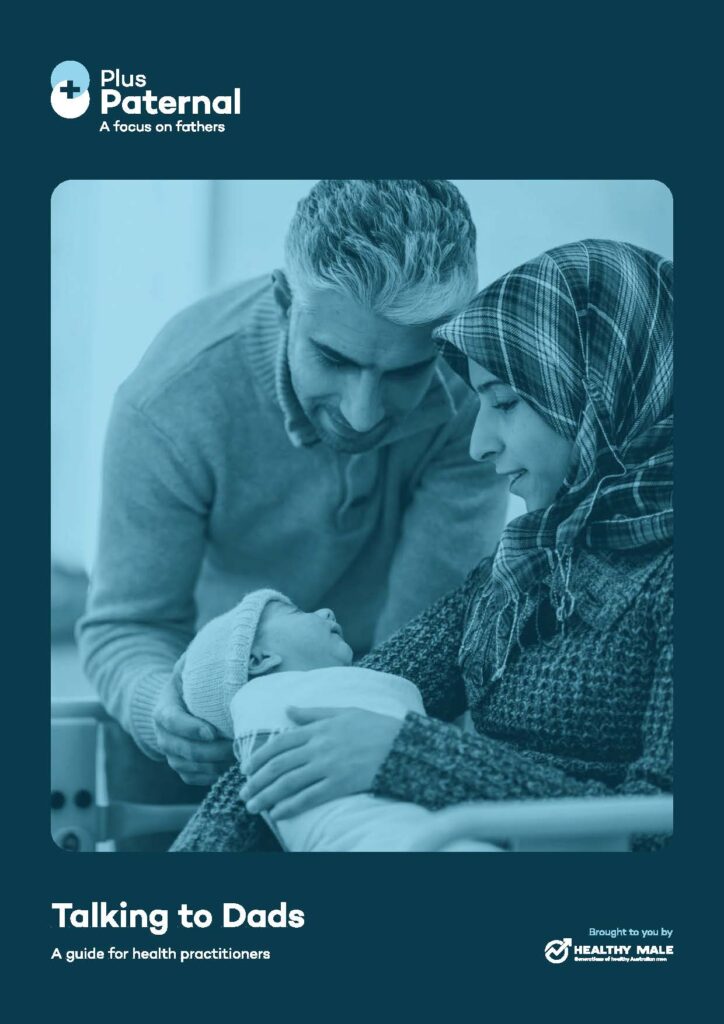
A guide for health practitioners
Do you work with people who are planning to have a child? Those who are pregnant? Or families that have recently had a baby?
Chances are you will have great skills and experience in working with mothers and birthing parents. Are you as confident when it comes to working with fathers and non-birthing parents? Do you know how best to engage with them and to inspire them to be confident, committed, equal parents? Would different words and/or messages have a better impact?
As the health system evolves from a mother-focused to a more family-centred approach, health practitioners are uniquely placed to create more inclusive experiences and environments for all parents.
By communicating intentionally, and by being attuned to each parent’s needs, you can set the scene early for a positive parenting experience that will help families to thrive.
This guide provides recommendations for improving your communication with fathers and non-birthing parents — some may appear obvious, or only subtly different to how you would communicate with mothers and birthing parents. However, small changes can make a significant difference to the way each parent engages, learns and views themselves, and to how they make informed choices about parenting or help-seeking.
Whether you’re new to working with families, or have been doing so for a long time, these recommendations should help you to inspire fathers and non-birthing parents to be engaged, confident, committed and equal parents.
Read the Talking to Dads guide
Do you want to know more?
Our evidence-informed recommendations are based on well-established theories about communication, family systems, attachment and gendered stereotypes and norms.
If you’re wanting to take a closer look at the theoretical concepts and frameworks that relate to language and communication with fathers, please see our Theories Paper.
Why language matters
The transition to parenthood is a challenging time for all parents2. It is also a time when parents are potentially interacting with many health practitioners across a range of reproductive and perinatal health services. These interactions, whether positive or negative, can be highly influential in helping shape parents’ knowledge, skills, attitudes and behaviours.
Although possibly unintentional, many fathers do not feel meaningfully engaged by the health system from preconception through to parenthood3, 4, 5, 6, 7. This can raise their anxiety and create a sense of helplessness8, 9.

What do we mean by language?
We have taken a broad definition of language and communication to incorporate words (written and spoken), messages, non-verbal communication, visual elements and environments.
Tuning-in to fathers
Do you routinely look for meaningful ways to include each parent and to tune-in to their particular questions or needs?
It is worth remembering that fathers, and indeed all parents, are products of their environments. Their knowledge, skills and attitudes will have been influenced by the worlds they live in — their own childhood experiences, their families and friends, their culture, their education, their socio-economic status, the media, our health system, and so on11, 12, 13. All these factors work to develop a father’s identity; how they perceive their role/s and their engagement with their child and family.
Although all men are different, there are some trends in their preferences for receiving information. An Australian study showed that14:
“I understand that the majority of attention needs to be provided to the mother and I am supportive of this. However, having a child was still the most important event of my life, and yet I was often ignored completely during preconception consultations, during the pregnancy, and perinatally. Being treated like a member of the team on more occasions would have been valued.”
– Father – Plus Paternal Survey Participant
Inclusive language
Ideally, our communication with parents, and people seeking to become parents, should make them feel comfortable and included. Although fathers are our focus here, the challenges they face during the transition to parenthood and throughout the perinatal period may well be shared more widely by non-birthing parents, regardless of their gender.
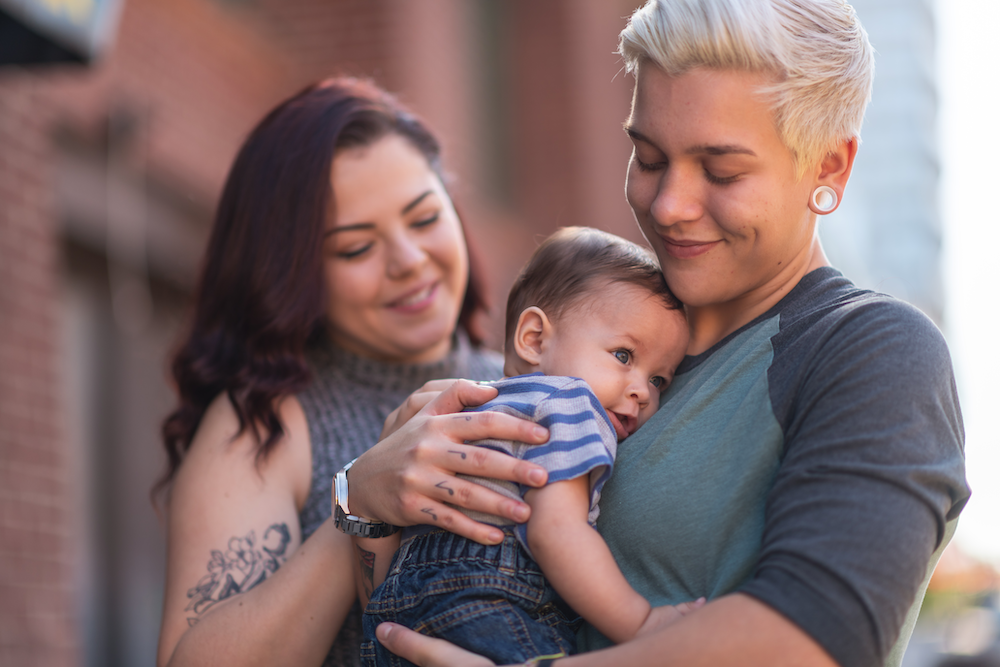
Using gender-neutral terms like ‘parents’ in relation to families and parenting acknowledges the diversity of families and helps create inclusive environments that recognise trans, gender-diverse and non-binary family members.
However, there are some risks in taking a blanket approach to gender-neutral communication. Parents mostly identify as either “mother” or “father” and understand these terms. They may not connect with gender-neutral terms such as “gestational parent” and “non-birthing parent”23. The term “birthing parent” does not speak to adoptive parents, and could elicit an emotional response where the birth experience has been traumatic.
In short, inclusive parenting language is tricky and evolving. Society does not yet have the perfect terms for everyone. Where you can’t individualise your language, our advice is to and use gender-neutral language alongside the more traditional gendered terms. In this resource we have used “fathers and non-birthing parents”.
Additional resources
- LGBTIQA+ Glossary of common terms – Australian Institute of Family Studies
- LGBTIA+ Inclusive language guide – Victorian Government
Promoting gender equality in parenting
By avoiding language that supports gendered parenting stereotypes, you will give space for families to decide together how they will share their roles, and for all parents to make equal contributions to parenting24.
Recommendations

Words to listen out for
Being alert to the language used by fathers and non-birthing parents is also important as their word choices, or body language (For example, their eye contact), may be a signal as to how they are feeling or coping with parenthood. The following words may be red flags that a father, or any parent, may be struggling, depressed or even suicidal25. If you hear them, prompt a deeper conversation to explore the extent of the parent’s feelings and the support required. Provide information about support services and encourage them to seek help if needed.
Additional resources
- PANDA (Perinatal Anxiety & Depression Australia) supports women, men and families across Australia affected by anxiety and depression during pregnancy and in the first year of parenthood. Call 1300 726 306, 9am – 7:30pm AEST (Mon-Fri).
- Lifeline provides 24-hour crisis counselling, support groups and suicide prevention services. Call 13 11 14, text on 0477 13 11 14 (12pm to midnight AEST) or chat online.
- Beyond Blue aims to increase awareness of depression and anxiety and reduce stigma. Call 1300 22 4636, 24 hours/7 days a week, chat online or email.
- MensLine Australia is a professional telephone and online counselling service offering support to Australian men. Call 1300 78 9978, 24 hours/7 days a week, chat online or organise a video chat
- Suicide Call Back Service provides 24/7 support if you or someone you know is feeling suicidal. Call 1300 659 467.
- RaisingChildren.net.au is an Australian parenting website that provides resources for fathers and all non-birthing parents

It’s not just about what you say
Your non-verbal communication helps to build relationships, provides cues to unspoken concerns and/or emotions, and may help to either reinforce, or contradict, your verbal comments. Importantly, it can also show that you have empathy26.
If you are displaying positive body language, your nonverbal movements and gestures will be communicating interest, enthusiasm, and positive reactions to what others are saying.
Take a minute to reflect on your body language and how it may be helping or hindering your engagement with parents.

Recommendations
“The language we use and the (antenatal) environments are still geared towards women.”
– Health practitioner – Plus Paternal Survey Participant
“We are supposed to be going into this parenting thing as a team but only one of us is getting any advice or support or acknowledgment.”
– Father – Plus Paternal Survey Participant
Service-level language and communication
Service-level language and communication
Positive impacts on families will be amplified if health services take a whole-of-service approach to inclusive practice and use language across all communication formats that reflect fathers and non-birthing parents as valuable, competent, equal parents.
Recommendations
Fathers ‘welcome’ is not enough
Many health organisations say that fathers, non-birthing parents and other partners are ‘welcome’ to attend and participate in their services. But what does this actually mean? That fathers can sit in if they’d like, or that fathers are invited by name and encouraged to attend? Or something else?
Unpacking the ‘welcome’ concept is an important step in increasing and improving the engagement of fathers and non-birthing parents. Although ‘welcome’ is a positive term which evokes warmth and inclusiveness, we would argue that it does not necessarily initiate the engagement of fathers and non-birthing parents in a sector that was not created for them, and has in many ways excluded them.
Some might also argue that the term ‘welcome’ provides an excuse for services (e.g. “We said they were welcome but they chose not to attend. We did our job.”).
The word can also feel like health services are welcoming an observer or third party, rather than an equal member of the parenting team.
Moving on from welcome
There are two ways to change our messaging in relation to fathers and non-birthing parents:
- Our internal language (within the workplace)
- Our external language (to families, fathers, etc.)
Internally, a shift from ‘welcome’ could move a health service to more of an active state, where they are ready and expecting fathers and non-birthing parents to participate. This would include building the knowledge and skills of practitioners to work with fathers and non-birthing parents, and for this to be seen as an important part of their job.
External language and messaging might need to be a little different. The word ‘expected’ can come across as quite demanding and put parents off. Any expectations should be framed in relation to ‘if and when’ you can attend. Health services need to be flexible and to provide at least some after-hours or telehealth sessions to facilitate engagement.
Services might choose phrases such as:
- We consider the participation of fathers and non-birthing parents to be necessary
- We strongly encourage fathers and non-birthing parents to attend
- The participation of fathers and non-birthing parents is really important
And go on to explain why. A simple rationale is that the participation of the ‘parenting team’ will mean both parents receive the information and skills needed to provide the best possible care for their child. Equal knowledge and skills set parents up at equal partners at home.
Moving beyond ‘welcome’ to inclusive practice starts with inviting fathers and non-birthing parents to participate, and being ready for them when they do.

References
1. Baldwin S, Malone M, Sandall J, et al. Mental health and wellbeing during the transition to fatherhood: a systematic review of first time fathers’ experiences. JBI Database System Rev Implement Rep 2018;16(11):2118-91. doi: 10.11124/JBISRIR-2017-003773 [published Online First: 2018/10/06]
2. Chin R, Hall P, Daiches A. Fathers’ experiences of their transition to fatherhood: a metasynthesis. Journal of Reproductive and Infant Psychology 2011;29(1):4-18. doi: 10.1080/02646838.2010.513044
3. Healthy Male, Plus Paternal Case for Change, Melbourne 2020
4. Chin R, Hall P, Daiches A. Fathers’ experiences of their transition to fatherhood: a metasynthesis. Journal of Reproductive and Infant Psychology 2011;29(1):4-18. doi: 10.1080/02646838.2010.513044
5. Dheensa S, Metcalfe A, Williams RA. Men’s experiences of antenatal screening: a metasynthesis of the qualitative research. Int J Nurs Stud 2013;50(1):121-33. doi: 10.1016/j.ijnurstu.2012.05.004 [published Online First: 2012/06/12]
6. Kowlessar O, Fox JR, Wittkowski A. The pregnant male: a metasynthesis of first-time fathers’ experiences of pregnancy. Journal of Reproductive and Infant Psychology 2014;33(2):106-27. doi: 10.1080/02646838.2014.970153
7. Steen M, Downe S, Bamford N, et al. Not-patient and not-visitor: a metasynthesis fathers’ encounters with pregnancy, birth and maternity care. Midwifery 2012;28(4):362-71. doi: 10.1016/j.midw.2011.06.009 [published Online First: 2011/08/09]
8. Fenwick J, Bayes S, Johansson M. A qualitative investigation into the pregnancy experiences and childbirth expectations of Australian fathers-to-be. Sex Reprod Healthc 2012;3(1):3-9. doi: 10.1016/j.srhc.2011.11.001 [published Online First: 2012/02/14]
9. Elmir R, Schmied V. A meta-ethnographic synthesis of fathers’ experiences of complicated births that are potentially traumatic. Midwifery 2016;32:66-74. doi: 10.1016/j.midw.2015.09.008 [published Online First: 2015/10/13]
10. Vallin E, Nestander H, Wells MB. A literature review and meta-ethnography of fathers’ psychological health and received social support during unpredictable complicated childbirths. Midwifery 2019;68:48-55. doi: 10.1016/j.midw.2018.10.007 [published Online First: 2018/10/27]
11. Roberts, D. Coakley, T, Washington, Kelley, A. Fathers’ Perspectives on Supports and Barriers That Affect Their Fatherhood Role. SAGE Open, 2014: 4 (1). doi:10.1177/2158244014521818
12. de Montigny, F., & Lacharite´, C. (2005). Perceived parental efficacy: Concept analysis. Journal of Advanced Nursing, 49(4), 387Y396. doi:10.1111/j.1365-2648.2004.03302.x
13. Sevigny, P. R., & Loutzenhiser, L. (2010). Predictors of parenting self-efficacy in mothers and fathers of toddlers. Child: Care, Health &Development, 36(2), 179Y189. doi:10.1111/j.1365-2214.2009.00980.x
14. Smith, J, Braunack-Mayer, A, Wittert, G, Warin, M. Qualities men value when communicating with general practitioners: implications for primary care settings. MJA 2008; 189: 618–621
15. Fenwick J, Bayes S, Johansson M. A qualitative investigation into the pregnancy experiences and childbirth expectations of Australian fathers-to-be. Sex Reprod Healthc 2012;3(1):3-9. doi: 10.1016/j.srhc.2011.11.001]
16. Ibid
17. Global Research Report on Male Social Connection – Fatherhood and Social Connections, Movember 2019
18. The cost of perinatal depression and anxiety in Australia, Pricewaterhouse Coopers, 2019
19. Healthy Male, Want to become a dad? Your health makes a difference to your baby’s health
20. Fletcher, R. (2011). The dad factor: How father-baby bonding helps a child for life. Sydney: Finch Publishing.
21. Panter- Brick,C.,Burgess,A.,Eggerman,M.,McAllister,F.,Pruett,K.,&Leckman,J.F.(2014).Practitioner review: Engaging fathers–recommendations for a game change in parenting interventions based on a systematic review of the global evidence. Journal of Child Psychology and Psychiatry, 55(11), 1187–1212.
22. Cabrera, N.J., Volling, B.L., & Barr, R. (2018). Fathers are parents, too! Widening the lens on parenting for children’s development. Child Development Perspectives, 12(3), 152–157
23. Gribble KD, Bewley S, Bartick MC, Mathisen R, Walker S, Gamble J, Bergman NJ, Gupta A, Hocking JJ, Dahlen HG. Effective Communication About Pregnancy, Birth, Lactation, Breastfeeding and Newborn Care: The Importance of Sexed Language. Front Glob Womens Health. 2022 Feb 7;3:818856. doi: 10.3389/fgwh.2022.818856. PMID: 35224545; PMCID: PMC8864964.
24. Natasha J. Cabrera (2020) Father involvement, father-child relationship, and attachment in the early years, Attachment & Human Development, 22:1, 134-138, DOI: 10.1080/14616734.2019.1589070
25. Shand FL, Proudfoot J, Player MJ, et al. What might interrupt men’s suicide? Results from an online survey of men. BMJ Open 2015;5:e008172. doi:10.1136/bmjopen-2015-008172
26. Hall JA, Harrigan JA, Rosenthal R. Nonverbal behavior in clinician-patient interaction. Appl Prev Psychol. 1995;4(1):21–35
A Case for Change
The Case for Change calls for a fundamental shift in the way society and the health system views fathers, and change across all levels of the system, and beyond.
Download report